Exploring the differences between an Equity Home Loan and a HELOC, this introduction sets the stage for a detailed comparison using a blend of informative and engaging language.
Detailing the unique features and considerations of each option, readers are invited to delve deeper into the realm of smart financial choices.
Equity Home Loan vs. HELOC
An equity home loan, also known as a home equity loan, is a type of loan where homeowners borrow against the equity in their property. This means they use the value of their home as collateral to secure the loan. On the other hand, a Home Equity Line of Credit (HELOC) is a revolving line of credit where homeowners can borrow against the equity in their home up to a certain limit, similar to a credit card.Key Differences
- Equity Home Loan: Provides a lump sum amount upfront which is repaid over a fixed term with a fixed interest rate. Borrowers receive the funds in one go and make regular monthly payments.
- HELOC: Allows homeowners to borrow funds as needed up to a certain limit, and repay only the amount borrowed. The interest rates can be variable, and homeowners can access funds multiple times during the draw period.
Benefits and Drawbacks
Equity Home Loan:
- Benefits:
- Fixed interest rates provide predictability in monthly payments.
- Receive a lump sum amount for large expenses or projects.
- Interest may be tax-deductible if used for home improvements.
- Drawbacks:
- Interest rates can be higher compared to HELOCs.
- Borrowers may be tempted to borrow more than needed due to the lump sum nature of the loan.
- May have closing costs and fees associated with the loan.
HELOC:
- Benefits:
- Flexibility to borrow funds as needed and repay only what is used.
- Variable interest rates may be lower initially compared to equity home loans.
- No interest is charged on the unused portion of the credit line.
- Drawbacks:
- Variable interest rates can increase over time, leading to higher payments.
- May be subject to annual fees or closing costs.
- Repayment terms can be less structured, leading to potential challenges in budgeting.
Equity Home Loan
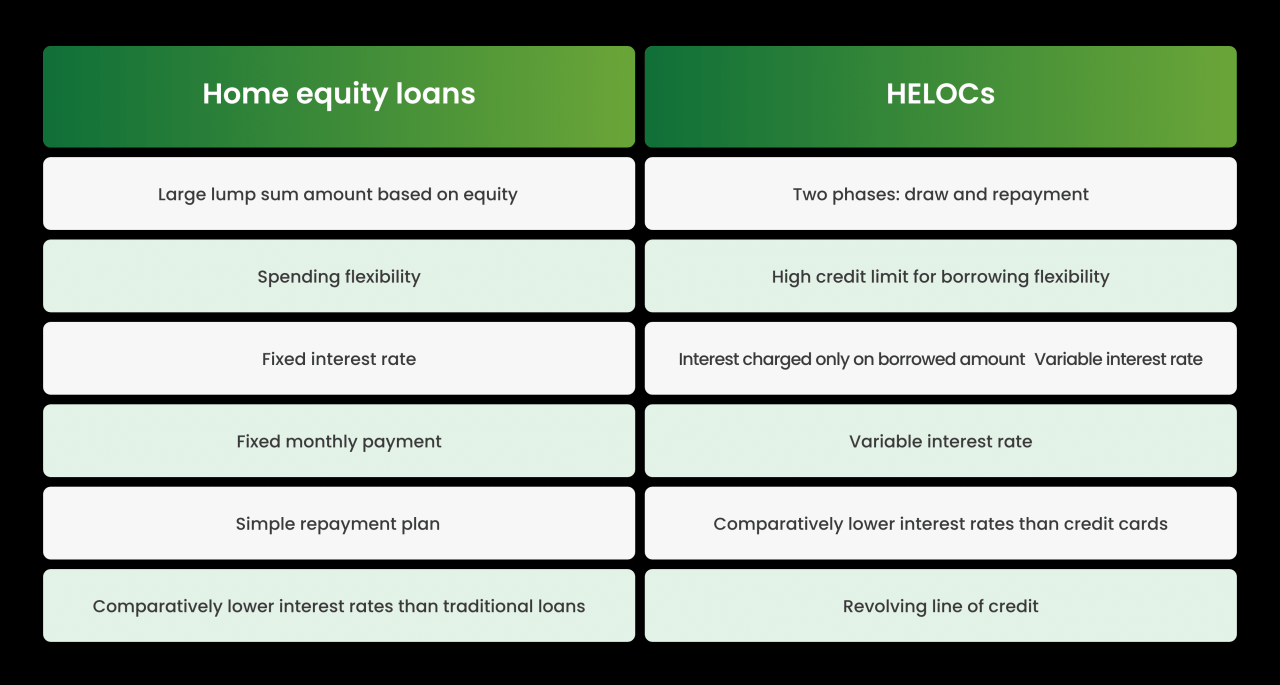 When considering an equity home loan, it is essential to understand its features, benefits, and eligibility criteria to make an informed financial decision.Equity home loans, also known as home equity loans, allow homeowners to borrow against the equity in their property. The equity is the difference between the current market value of the property and the outstanding mortgage balance. Here are some key features of equity home loans:
Features of Equity Home Loan:
- Fixed interest rates: Equity home loans typically offer fixed interest rates, providing predictability in monthly payments.
- Lump-sum payment: Borrowers receive the loan amount in a lump sum, which can be used for various purposes.
- Secured by property: The loan is secured by the property, which may result in lower interest rates compared to unsecured loans.
- Longer repayment terms: Equity home loans often have longer repayment terms, allowing borrowers to spread out payments over time.
Situations where Equity Home Loan is Preferred:
- Home renovation: Funding home improvement projects using the equity in your property can increase its value.
- Debt consolidation: Consolidating high-interest debt with an equity home loan can lead to lower overall interest payments.
- Major expenses: Using an equity home loan for significant expenses like education or medical bills can be more cost-effective than other forms of borrowing.
Eligibility Criteria and Considerations:
- Equity requirement: Lenders usually require a minimum amount of equity in the property to qualify for an equity home loan.
- Credit score: A good credit score is essential to secure favorable terms and interest rates on an equity home loan.
- Income stability: Lenders assess the borrower's income stability to ensure they can repay the loan amount.
- Debt-to-income ratio: Your debt-to-income ratio, which compares your monthly debt payments to your income, is considered during the application process.
HELOC
HELOC, or Home Equity Line of Credit, is a type of loan that allows homeowners to borrow against the equity in their homesFeatures of a HELOC
- Flexible access to funds: Borrowers can access funds as needed, up to a predetermined credit limit.
- Interest-only payments: Typically, borrowers only need to make interest payments during the draw period, which can range from 5 to 10 years.
- Variable interest rates: HELOCs often have variable interest rates tied to an index, which means monthly payments can fluctuate.
- Revolving credit: As you pay off the balance, you can borrow against the line of credit again, similar to a credit card.
Scenarios where a HELOC is more suitable
- Home renovations: If you have ongoing renovation projects with fluctuating costs, a HELOC may be a better option due to its flexibility in accessing funds.
- Emergency funds: HELOCs can serve as a safety net for unexpected expenses or emergencies, allowing you to borrow only what you need when you need it.
- Debt consolidation: For consolidating high-interest debt, a HELOC can offer lower interest rates and potentially tax-deductible interest payments.
How interest rates work in a HELOC
Interest rates in a HELOC are typically variable and tied to a benchmark rate, such as the prime rate. During the draw period, borrowers make interest-only payments based on the outstanding balance. As the interest rate can vary, monthly payments may fluctuate, impacting overall borrowing costs.It's essential to understand how interest rates can affect your monthly payments and overall borrowing costs in a HELOC.
Equity Home Loan vs. HELOC: Decision-Making Factors
When choosing between an equity home loan and a HELOC, there are several key factors to consider to make the right financial decision. Let's delve into the comparison of these options based on their repayment flexibility, impact of interest rates, and alignment with personal financial goals.Repayment Options Flexibility
One of the primary differences between an equity home loan and a HELOC is the flexibility in repayment options. With an equity home loan, borrowers typically have a fixed repayment schedule, making it easier to budget for monthly payments. On the other hand, a HELOC offers a more flexible repayment structure where borrowers can choose to pay interest only or make additional payments towards the principal as needed.
Impact of Interest Rates
Interest rates play a significant role in determining the long-term costs of both equity home loans and HELOCs. Equity home loans usually come with fixed interest rates, providing stability in monthly payments over the loan term. In contrast, HELOCs often have variable interest rates that can fluctuate based on market conditions, potentially leading to higher costs over time if interest rates rise.
Evaluating Personal Financial Goals
When deciding between an equity home loan and a HELOC, it's crucial to evaluate your personal financial goals. Consider factors such as your financial stability, long-term financial plans, and risk tolerance. If you prefer predictable payments and are planning for a specific financial goal, an equity home loan may be the better choice. On the other hand, if you value flexibility and anticipate needing access to funds over time, a HELOC could align better with your financial objectives.
Concluding Remarks
In conclusion, weighing the pros and cons of Equity Home Loans and HELOCs is crucial in making a sound financial decision. This discussion aims to equip you with the necessary insights to navigate this financial landscape effectively.
Helpful Answers
What factors should I consider when choosing between an Equity Home Loan and a HELOC?
Consider factors such as your financial goals, repayment preferences, and long-term financial plans to make the right choice.
Can I switch from an Equity Home Loan to a HELOC or vice versa?
It is possible to switch between these options, but it's essential to evaluate the costs, terms, and benefits before making a decision.
How do I know if I qualify for an Equity Home Loan or a HELOC?
Qualification criteria typically include factors like credit score, income stability, and existing debt obligations. It's best to consult with a financial advisor for personalized guidance.